
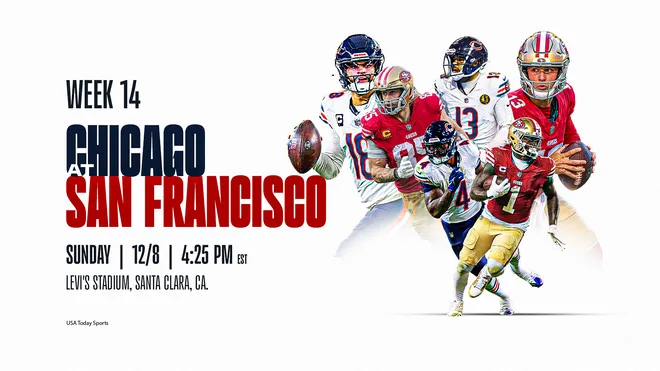
Introduction – What Really Happened When the Bears Met the 49ers?
Have you ever wondered what truly separates a memorable NFL showdown from an ordinary one? It’s not just the final score—it’s the individual performances, the split-second decisions, and the players who quietly tilt the field without making the highlight reels. When the Chicago Bears faced off against the San Francisco 49ers, fans expected physical football, bold play-calling, and dramatic momentum swings. What they got was even better: a matchup full of standout player stats, unexpected heroes, and moments that showcased each team’s identity.
This game wasn’t just two franchises meeting on the schedule. It was a clash of evolving strategies. The Bears continued working on rebuilding their offense and improving defensive consistency, while the 49ers leaned on their disciplined system, strong coaching, and playmakers who thrive under pressure. Both fanbases circled this matchup early, and by the time kickoff arrived, anticipation had already grown into a full-blown narrative.
In this detailed breakdown, we’ll go far beyond the surface-level scoreboard. We’ll explore every key stat, every standout drive, and every player who genuinely influenced the outcome. Whether you’re a die-hard fan or someone who simply loves understanding football on a deeper level, this analytical dive will bring you right back into the heart of the action.
Quarterback Breakdown – The Battle Under Center
Justin Fields: Flashes of Brilliance Mixed With Growing Pains
chicago bears vs 49ers match player stats’ performance in this matchup was one of the main talking points heading into the game. Known for his athleticism and dual-threat ability, Fields stepped onto the field with expectations placed squarely on his shoulders. Throughout the game, he delivered several impressive moments, especially when he extended plays and kept drives alive with his legs. These moments gave the Bears’ offense bursts of energy and demonstrated how dangerous he can be in open space.
However, Fields struggled at times with pocket timing and defensive pressure. The 49ers’ front seven is not easy to read, and their ability to disguise blitzes often forced Fields into making quicker decisions than he preferred. While he completed several well-thrown passes into tight windows, inconsistency crept in during long drives. Missed reads and overthrows occasionally stalled the momentum the Bears were trying to build.
Despite the ups and downs, Fields showed leadership throughout the game. His awareness improved as the matchup continued, and he leaned into improvisation whenever designed plays broke down. It wasn’t a flawless performance, but it was a competitive one—marked by resilience, determination, and flashes of high-level quarterbacking that the Bears hope to see more frequently.
Brock Purdy: Efficiency, Composure, and Mastery of the System
On the opposite sideline, Brock Purdy delivered the kind of performance 49ers fans have come to appreciate. Purdy’s ability to remain calm under pressure is one of his strongest traits, and that composure was on full display. Whether he faced a collapsing pocket or heavy coverage downfield, Purdy trusted the system, made smart reads, and rarely forced throws that weren’t there.
What made Purdy’s stats in this matchup impressive was not just the number of completions—it was the efficiency behind them. Short, accurate passes kept the chains moving, and well-timed deep shots opened up the field. His connection with receivers looked natural, almost effortless at times. Every drive seemed to have at least one moment where Purdy placed the ball perfectly.
Purdy also showcased growth in his ability to manage game tempo. Rather than rushing throws or trying to hit splash plays unnecessarily, he leaned into discipline. His stats reflected a quarterback who understands his role, trusts his playmakers, and executes Kyle Shanahan’s system with precision.
Running Game Analysis – Ground-and-Pound vs Strategic Burst
Chicago Bears Running Backs: Hard Yards and Strategic Rotations
The Bears came into the game wanting to establish the run early. Their running backs delivered exactly that—tough yards, steady forward progress, and a rotation that kept players fresh. The ground attack wasn’t always explosive, but it was physical. Each run seemed to chip away at the 49ers’ front, wearing them down over time.
One thing that stood out in the Bears’ rushing stats was the commitment to balance. Rather than relying on a single feature back, Chicago distributed carries across multiple players. This approach helped reduce predictability, kept defenders guessing, and contributed to sustained drives, especially on second down when they avoided long-yardage situations.
Even though no Bears running back dominated the stat sheet, their collective effort played a crucial role in the team’s offensive rhythm. Several key third-and-short conversions came from decisive cuts and gritty yards after contact. The Bears’ ground game didn’t steal the spotlight, but it provided necessary support in a matchup where controlling possession mattered immensely.
49ers Running Backs: Explosive Plays and Consistent Impact
On the 49ers’ side, the run game played a much more dynamic role. With a mix of well-designed inside zone plays, outside sweeps, and creative motion concepts, San Francisco kept the Bears’ defense on its heels. Every time the Niners handed the ball off, there was a sense that a big play could break open at any moment.
The standout running back—no surprise—was the player who thrives in open field space and has become one of the league’s best all-around offensive weapons. His acceleration through the gaps forced Chicago’s linebackers into difficult angles. Several carries resulted in chunk plays that flipped field position instantly.
San Francisco’s ground attack looked polished, efficient, and explosive. The stats reflected a team that gained confidence with every rush, using the run game not just to move the ball but to dictate the overall tempo of the matchup. Their success forced Chicago’s defense to adjust, which ultimately opened opportunities in the passing game.
Wide Receivers and Tight Ends – The Battle for Separation
Bears Receivers: Moments of Production in a Tough Matchup
Chicago’s receiving corps had a challenging assignment. Between the 49ers’ aggressive pass rush and strong secondary, finding separation wasn’t easy. Yet the Bears’ receivers still produced solid moments throughout the game. Whether it was sharp route-running on slants or contested catches along the sideline, they worked hard for every yard earned.
One notable takeaway from their performance was their willingness to fight through physical coverage. Several completions came in tight windows, where timing between Fields and his receivers mattered more than anything. While the Bears’ receivers didn’t put up massive stats, their contribution helped sustain drives and opened opportunities for play-action.
Drops and miscommunications did occur at points, slowing down offensive progress. However, the overall performance highlighted growth and grit. They didn’t produce eye-popping numbers, but they delivered reliable hands when the Bears needed them most.
49ers Receivers and Tight Ends: Precision, Playmaking, and Smart Execution
Meanwhile, the 49ers’ talent in the receiving game made a clear difference. From star wideouts to their elite tight end threat, San Francisco showcased depth, versatility, and exceptional efficiency. Each receiver brought something unique to the field—speed, physicality, or route intelligence—which allowed Purdy to distribute the ball effectively.
The tight end play was particularly noteworthy. Whether blocking in the run game or catching passes across the middle, the 49ers’ TE made an impact on nearly every snap. His ability to find soft spots in zone coverage created mismatches that the Bears struggled to contain. Multiple long gains came from perfectly timed seams and well-executed play-action.
San Francisco’s receivers didn’t just rely on athleticism—they executed with discipline. Their yards-after-catch ability also played a massive role in stretching Chicago’s defense. Their player stats were a perfect reflection of a coordinated and well-coached offensive unit.
Defensive Performance – Tackles, Pressure, and Game-Changing Plays
Bears Defense: Grit and Determination Despite Challenges
The Bears’ defense delivered a performance full of hustle and determination. From the opening drive, they made it clear they weren’t intimidated by the 49ers’ reputation. Chicago’s defensive front held strong in several key moments, forcing San Francisco into difficult third-down situations.
What stood out most was the physicality. The Bears’ linebackers flew to the ball, delivering hard tackles and limiting yards after contact. Their secondary also held up reasonably well against a talented 49ers receiving group, breaking up multiple passes and showing improved communication.
Still, the defense faced challenges. Missed tackles in open field situations allowed San Francisco to extend several drives. The inability to consistently pressure Purdy also made it difficult to disrupt the passing rhythm. The Bears’ stats across the board demonstrate a group that worked hard but couldn’t always contain the efficiency of the 49ers’ offense.
49ers Defense: Pressure, Discipline, and Game Control
The 49ers’ defense is known for its explosive pass rush and well-coordinated scheme, and that reputation held true in this matchup. Their front four consistently pressured Fields, forcing hurried throws and disrupting designed plays. Every dropback felt contested, and that pressure translated directly into multiple drive-ending plays.
Their linebackers also played a critical role in containing Fields’ mobility. Whenever he attempted to escape the pocket, he often found a defender ready to collapse the space. The secondary complemented this pressure beautifully, sticking to receivers tight enough to prevent easy completions.
The 49ers’ defensive stats paint the picture of a unit that understands its identity: aggressive, disciplined, and opportunistic. They didn’t just stop plays—they shaped the game’s momentum.
Special Teams – The Hidden Contributors
Chicago Bears Special Teams: Reliable but Seeking Big Moments
Special teams don’t always receive the love they deserve, but in this game, the Bears’ unit made steady contributions. Field position played a crucial role throughout the matchup, and Chicago’s punt coverage consistently pinned San Francisco deep. Their kicker stayed reliable, converting routine attempts and keeping the score within reach.
Kick returns, however, didn’t bring the spark Chicago hoped for. The 49ers’ coverage team quickly closed gaps, making it hard for the Bears to break free into open field. Still, Chicago’s special teams delivered the steady, no-mistake performance that every coach hopes to see.
49ers Special Teams: Field Position and Tactical Execution
San Francisco’s special teams were equally disciplined. Their punter flipped field position multiple times, putting Chicago’s offense in difficult starting spots. The precision in their kicking game helped maintain control of momentum, especially during long drives.
Return units offered more explosiveness, with several runs that shifted tempo. Whether it was a smart fair catch or a decisive cutback, the 49ers handled special teams with the same attention to detail seen across their roster.
Key Players Who Defined the Match
Chicago Bears Standout Performers
From hard-running backs to defensive players who never stopped pursuing the ball, the Bears had several individuals who stepped up. Their linebacker corps stood out in particular, consistently making tackles that prevented bigger plays. On offense, Fields delivered several highlight plays that kept the Bears competitive.
These performances reflect a team still growing, still building, but showing real promise. While the stats didn’t always tilt their way, the effort and development were undeniable.
San Francisco 49ers Standout Performers
The 49ers benefited from multiple key players who delivered high-impact performances. Their quarterback, running back, tight end, and pass rushers all contributed significantly. Every time the game seemed close to shifting, one of these playmakers made a big play to stabilize momentum.
San Francisco’s stats were the product of discipline, preparation, and top-tier execution. Their ability to elevate in big moments ultimately defined the outcome.
Final Thoughts – What These Player Stats Tell Us
Every matchup between the Chicago Bears and the San Francisco 49ers brings intensity, but the player stats from this particular game reveal far more than numbers on a page. They tell a story of two teams at very different stages of development—one building identity and the other refining an already polished system.
The Bears showcased effort, flashes of brilliance, and growing chemistry. Meanwhile, the 49ers highlighted why they remain one of the most complete and consistent teams in the league. From deep offensive execution to relentless defensive pressure, they played with the confidence of a well-established contender.
Ultimately, these player stats remind us that football is a game of details. Every yard gained, every tackle made, and every decision under pressure shapes the outcome. This matchup delivered everything fans hoped for: competition, intensity, and performances worth analyzing long after the final whistle.