
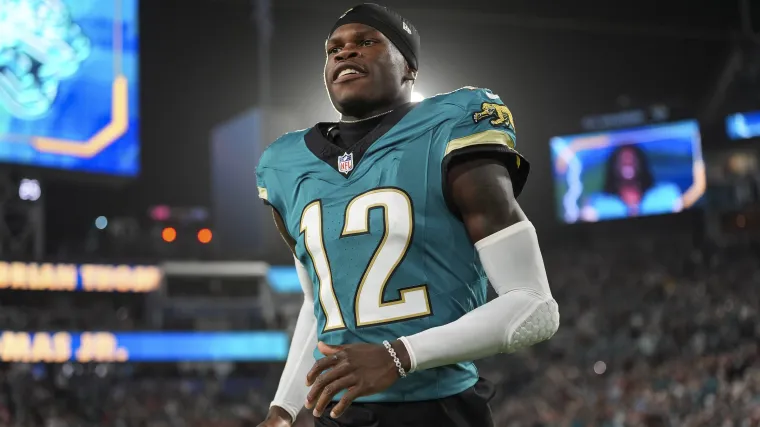
When the Jacksonville Jaguars meet the Tennessee Titans, it’s never just another AFC South game. It’s a rivalry that’s built on physical football, unpredictable momentum swings, and players who rise to the occasion when it matters the most. But what really happened in this matchup? And which players shaped the flow of the game with the kind of stats that fans talk about for weeks?
In this detailed breakdown, we’ll take a casual but insightful look at the player stats, key moments, and standout performances that defined this Jaguars vs Titans battle. Whether you’re a seasoned analyst, a die-hard fan, or someone who simply enjoys understanding the game beyond the final score, this deep dive brings every angle into focus.
Quarterback Performance: A Tale of Contrasts Between Styles and Execution
Trevor Lawrence’s Controlled Aggression
Trevor Lawrence walked into this matchup with something to prove. After weeks of refining his decision-making and timing, this game felt like a statement opportunity. From the opening drive, Lawrence displayed a blend of confidence and calm that set the tone for Jacksonville’s offense. His early throws were crisp, timely, and delivered with a level of anticipation that suggested he was reading Tennessee’s defense as clearly as a playbook.
Throughout the game, Lawrence leaned heavily on timing routes and quick reads, allowing him to neutralize the Titans’ pass rush. His intermediate passing numbers were especially impressive, consistently exploiting soft zones and forcing Tennessee’s linebackers to widen their drops. That opened up the middle of the field for Jacksonville’s tight ends and created the rhythm the Jaguars needed to sustain long drives.
What made Lawrence’s stat line stand out wasn’t just the number of completions or yards—it was the efficiency. He protected the ball, limited risky throws, and executed the game plan like a seasoned veteran. For a team that thrives when he’s sharp, Lawrence delivered exactly the performance Jacksonville needed.
Will Levis and the Titans’ Vertical Ambition
On the other side, Will Levis approached this matchup with a completely different style. Where Lawrence leaned on precision and timing, Levis leaned on raw arm talent. Tennessee built its offensive plan around vertical stretch concepts, hoping to capitalize on the Jaguars’ tendencies to jump short routes and play aggressive man coverage.
However, Levis found himself under pressure far more often than he expected. Jacksonville’s defensive front was relentless, and that constant disruption affected both his timing and decision-making. Even with the pressure, Levis managed to hit several explosive plays downfield, showcasing his ability to keep Tennessee in games with a single throw.
Despite flashes of brilliance, inconsistency hurt Levis’ overall stat line. A few passes sailed high, a few reads came late, and Jacksonville’s secondary capitalized on those mistakes. Still, the raw numbers reflected a quarterback who refused to back down and kept swinging until the final whistle.
Statistical Comparison That Framed the Game
When comparing both quarterbacks side-by-side, the difference in efficiency became the deciding factor. Lawrence finished with a higher completion percentage, better yards-per-attempt, and a cleaner turnover margin. Levis, meanwhile, posted solid yardage but struggled in red-zone situations and on third downs.
The quarterback duel didn’t just shape the narrative—it shaped the scoreboard.
Running Game Breakdown: Power vs Precision in the Backfield
Travis Etienne Jr.: The Jaguars’ Spark Plug
Travis Etienne has grown into one of Jacksonville’s most valuable offensive weapons, and this matchup showcased exactly why. From the opening quarter, Etienne ran with both burst and patience, waiting for blocks to develop before cutting sharply into open lanes. His ability to read the Titans’ shifting defensive front allowed the Jaguars to create consistent gains on early downs.
What made Etienne’s performance even more impressive was his versatility. Not only did he produce on the ground, but he contributed as a receiver, slipping out into the flats and turning short passes into chunk plays. That dual-threat ability forced Tennessee’s linebackers into uncomfortable coverage responsibilities, creating mismatches that Jacksonville exploited repeatedly.
Statistically, Etienne’s yardage totals tell only part of the story. His impact came from keeping Jacksonville’s offense balanced and unpredictable. Every time he touched the ball, Tennessee’s defense had to react, adjust, and stretch—something that ultimately paid dividends in the passing game.
Derrick Henry: Power That Demands Respect
Derrick Henry entered this matchup with his usual aura of inevitability. The Jaguars knew the Titans would feed him early and often, and Tennessee didn’t disappoint. Henry’s downhill running style challenged Jacksonville’s linebackers on every snap, forcing physical tackles and testing the Jaguars’ stamina.
Henry’s best stretches came in the second quarter when Tennessee leaned into inside zone and counter schemes that allowed him to build momentum before contact. Once he hit second-level defenders, yardage came in chunks, and Tennessee used that to control possession for long stretches.
Though Henry didn’t break loose for his trademark 50-yard rumble, his consistent four to six-yard gains kept the Titans within striking distance. His stat line reflected a grinder’s performance—steady, physical, and essential.
The Battle of Backfields: Efficiency vs Volume
Where Etienne created flexibility, Henry created control. Jacksonville’s backfield emphasized balance; Tennessee’s emphasized identity. The stat sheet showed Etienne with more all-purpose yards, while Henry finished with more carries and more defensive attention directed his way.
Both backs shaped their teams’ offensive rhythm, but the Jaguars’ versatility gave them a strategic edge.
Receiving Corps Impact: Playmakers Who Tilted Momentum
Calvin Ridley’s Precision and Timing
Calvin Ridley’s connection with Lawrence continues to evolve, and this game was another step forward. Ridley ran crisp routes all afternoon, creating separation with his footwork and his ability to manipulate defensive leverage. Tennessee’s corners struggled to contain him on deep outs and timing-based slants, which allowed Jacksonville to consistently move the chains.
His stat totals—reflecting multiple receptions, big first-down conversions, and a handful of explosive plays—highlight how integral he was to Jacksonville’s offensive success. Ridley didn’t just catch passes; he changed Tennessee’s defensive structure.
DeAndre Hopkins: The Titans’ Reliable Escape Valve
Even with the Titans’ passing game under pressure, DeAndre Hopkins found a way to make his presence felt. His chemistry with Levis isn’t perfect yet, but in this matchup, it looked promising. Hopkins used his physicality to win contested catches, turning tough sideline throws into highlight moments.
In critical situations—third and long, red-zone pressure, or busted plays—Levis looked for Hopkins. That trust translated into one of the strongest receiving performances for Tennessee in this matchup.
Tight End Contributions That Changed Drives
Both teams leaned on their tight ends for key moments. Jacksonville used theirs as safety outlets and run-blocking support, while Tennessee’s tight ends acted as quick middle-field options for Levis under duress.
Though not flashy, tight end contributions kept drives alive and added important yardage that influenced game flow.
Defensive Standouts: Disruption, Pressure, and Game-Changing Moments
Josh Allen’s Relentless Edge Pressure
Josh Allen is the motor of Jacksonville’s pass rush, and he played like it. From the first quarter, he applied consistent pressure on Will Levis, forcing hurried throws and collapsing the pocket. His ability to win one-on-one matchups made Tennessee adjust protection schemes, often dedicating an extra blocker just to slow him down.
Allen’s stat sheet reflected tackles for loss, quarterback hits, and a sack—but his true impact was even greater. Every time Tennessee dropped back to pass, Allen influenced the timing and trajectory of the play.
Jeffery Simmons Anchoring the Titans’ Defense
Jeffery Simmons remains the heart of Tennessee’s defensive line, and he delivered a physical masterclass. He clogged running lanes, devoured double teams, and still found ways to penetrate into the backfield. Jacksonville had to keep track of him on every snap, adjusting run schemes and calling quicker passes to avoid Simmons wrecking the play.
Although the Titans struggled overall, Simmons’ individual performance was a reminder of why he is one of the most disruptive interior defenders in the league.
Secondary Matchups and Turnover Opportunities
Both defensive backfields had their share of standout plays. Jacksonville’s corners jumped routes at opportune times, nearly securing multiple interceptions. Tennessee’s safeties played aggressive in run support, stepping up to contain Etienne whenever possible.
Turnover opportunities—both secured and missed—shaped momentum swings throughout the match. Jacksonville’s secondary ended the game with a slight edge, thanks to better communication and tighter coverage in key situations.
Special Teams Review: Hidden Yardage That Impacted the Outcome
Field Position Control by Jacksonville
Jacksonville’s special teams quietly delivered one of their best performances of the season in this matchup. Their punt coverage was disciplined, maintaining lanes and preventing Tennessee’s return unit from generating explosive swings. That field position consistency gave the Jaguars’ defense a buffer and allowed their offense to operate on short fields multiple times.
The Jaguars’ kicker also contributed with reliable field goal conversions, helping build momentum when the offense stalled near the red zone.
Titans’ Return Game Flashes but Lacks Consistency
Tennessee’s return unit showed flashes of potential with a couple of solid runbacks that shifted momentum. However, blocking inconsistencies and strong Jacksonville containment limited their big-play opportunities. The Titans needed more hidden yardage to compensate for offensive struggles, but they couldn’t consistently generate it.
Their kicker remained dependable, but the special teams unit as a whole failed to turn the tide.
The Battle of Hidden Stats
Field position, punt hangtime, kickoff depth—these often-overlooked stats played a bigger role than most fans realize. Jacksonville won this hidden war, and the ripple effects were felt throughout every quarter.
Coaching Decisions and Game Strategy Analysis
Doug Pederson’s Balanced Game Plan
Doug Pederson has built his coaching philosophy around balance and adaptability, and this game plan reflected that perfectly. He blended run and pass play-calls in ways that kept Tennessee guessing and made life easier for Trevor Lawrence. Pederson also leaned into quick-developing plays to counteract Simmons’ interior pressure.
His red-zone creativity showed up as well, mixing misdirection, play-action, and tempo changes that prevented Tennessee from setting their feet. The result was a smooth-flowing offensive performance that felt calculated but never robotic.
Titans’ Strategic Intent and Adjustments
The Titans approached this game with a smashmouth mindset—lean on Derrick Henry early, then use play-action to open the vertical passing game. In theory, the strategy worked. In practice, Tennessee’s protection breakdowns forced them to adjust sooner than they planned.
Defensively, Tennessee attempted to disguise coverages and overload pressure, but Jacksonville consistently found the answers. Statistically, the Titans’ defense held up admirably in spots, but over the course of the game, mismatches mounted.
Clock Management and Fourth-Down Calls
One of the subtler coaching battles occurred in the realm of time and possession. Jacksonville’s clock management was sharp, especially in late-game scenarios where they needed to burn time while still threatening offensively. Pederson’s fourth-down decisions were confident but calculated, and his team executed.
Tennessee found themselves in more desperation situations, and while some aggressive decisions kept them alive, others stalled drives and shifted momentum.
Final Statistical Overview: What the Numbers Really Say
Jaguars’ Offensive Efficiency
Jacksonville finished the game with impressive yards-per-play numbers, driven by Lawrence’s passing efficiency and Etienne’s all-around production. Their third-down conversion rate hovered near elite territory, reflecting their balanced attack and smart play selection.
The receiving corps posted solid yardage, with Ridley leading the pack in targets and impact. Jacksonville also minimized penalties, keeping their offense on schedule.
Titans’ Resilient but Flawed Performance
Tennessee’s total yardage looked respectable, but inconsistency on key downs dragged down their overall offensive efficiency. Levis’ explosive throws inflated the stat sheet but couldn’t overcome multiple stalled drives.
Defensively, the Titans racked up an impressive number of pressures, but poor coverage communication led to several big completions that flipped field position.
Turnover and Time of Possession Factors
Jacksonville won the turnover battle, and that alone swung at least one drive’s result. Time of possession also leaned their way, thanks to more sustained drives and fewer negative plays.
In rivalry matchups like this, those edges matter.
Conclusion: Player Stats That Tell the Story of a Hard-Fought Rivalry
The Jacksonville Jaguars vs Tennessee Titans matchup delivered everything fans expect from AFC South football: physical play, strategic depth, explosive moments, and standout performances on both sides of the field. The player stats didn’t just tell the story—they revealed how each team approached the game, what worked, and where the margin of victory was carved out.
Jacksonville’s efficiency and balance ultimately gave them the edge, while Tennessee’s flashes of brilliance weren’t enough to overcome inconsistent execution. From Lawrence’s precision to Henry’s power and from Josh Allen’s pressure to Hopkins’ resilience, every stat contributed to a rivalry chapter that will be remembered.
If you ever needed proof that numbers can tell a deeper story in football, this matchup was the perfect example.