
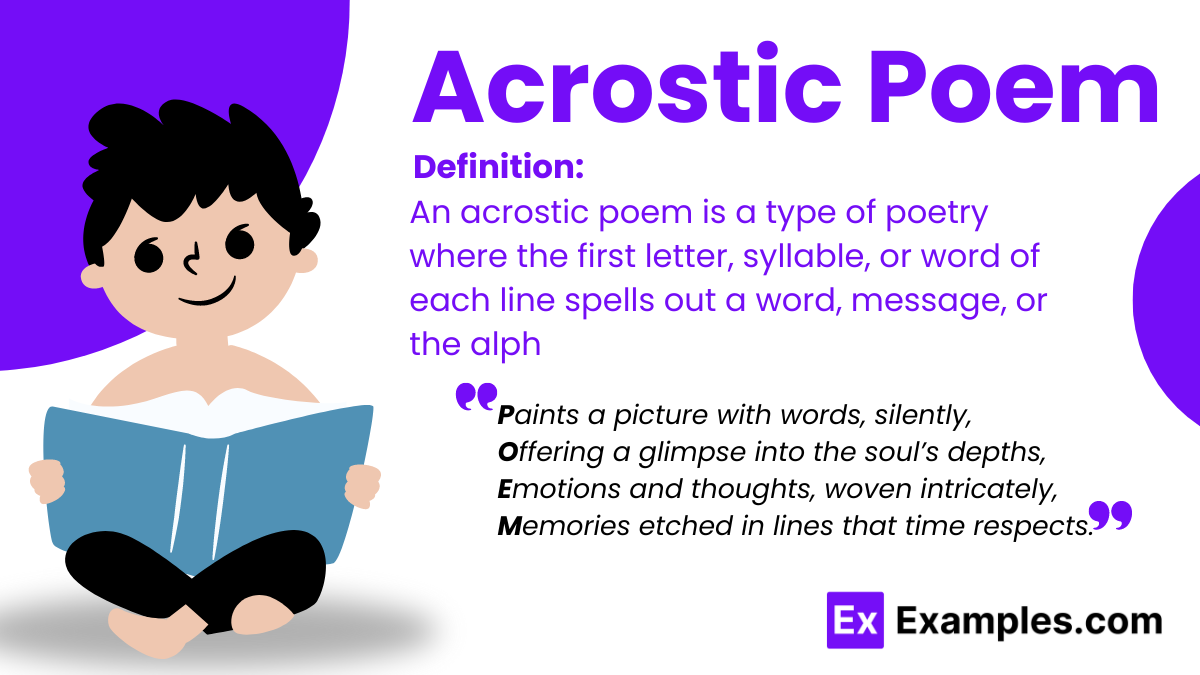
Acrostic poems may look simple at first glance, but the truth is that they’re one of the most surprisingly powerful and versatile forms of poetry. Whether you want to craft a sweet message for someone special, create memorable content for a classroom, or sharpen your creative writing skills, acrostic poems give you a fun and engaging way to play with language. What makes them even more appealing is the fact that you don’t need to be a professional poet to write one that stands out. You only need a bit of creativity, a theme, and the ability to align your words vertically in a way that creates meaning horizontally.
In this article, we’ll break down what acrostic poems really are, explore different types and structures, analyze examples ranging from simple to advanced, and teach you how to write your own like a pro. By the time you reach the end, you’ll be confident enough to craft acrostics for school projects, literary pieces, birthday cards, or even social media posts that you want to make more thoughtful and engaging.
So let’s jump right into the world of acrostic poems—where structure and creativity blend beautifully to produce something unforgettable.
What Is an Acrostic Poem? Understanding the Basics
Acrostic poems are a form of poetry in which the first letter of each line spells out a specific word or message when read from top to bottom. This hidden or semi-hidden word is usually the theme, subject, or emotional core of the poem. For example, an acrostic poem spelling the word “LOVE” might have each line beginning with the letters L, O, V, and E, with each line describing something related to love.
What makes acrostic poems unique is their ability to embed meaning both vertically and horizontally. The vertical word provides direction and restriction, while the horizontal lines allow the poet full freedom of expression. This dual structure makes acrostics ideal for teaching poetic techniques, building vocabulary, and crafting emotional messages with a twist. Unlike complex poetic forms like sonnets or haikus that require strict syllable counts and rhyme patterns, acrostics let you be flexible—no rhyme required unless you want it.
Another thing that makes acrostics appealing is how universal they are. Beginners can create simple versions with ease, while experienced writers can challenge themselves by adding complexity such as additional hidden messages, deeper metaphors, longer stanzas, and even double acrostics. This ability to scale makes them perfect for poets, students, teachers, and casual writers alike. And because acrostics are visually unique, they tend to stand out in any written collection, making them excellent tools for storytelling, branding, or personal expression.
Why Acrostic Poems Are So Popular Today
Acrostic poems have gained renewed popularity in recent years, especially across social media platforms like Instagram, TikTok, and Pinterest. These platforms thrive on short, visually appealing content—and acrostics fit perfectly into those formats. A vertical word combined with horizontal lines creates a ready-made aesthetic that people love sharing, especially for topics like self-love, motivation, friendships, and birthdays.
Beyond social media, acrostic poems are widely used in classrooms because they help students expand their creativity while improving their writing skills. Teachers often rely on acrostics to help kids learn adjectives, practice descriptive writing, and feel more confident using their vocabulary. Since acrostics are low-pressure but high-reward, students can experiment without feeling overwhelmed.
Another reason for the ongoing popularity is the personalization factor. Acrostic poems are excellent gifts. Whether you’re writing one for a friend’s birthday, a romantic partner, a teacher, or even a co-worker, a personalized acrostic feels thoughtful and heartfelt. It shows effort, creativity, and intention—qualities that make any message instantly more meaningful.
Finally, acrostic poems are popular because they help writers improve their creative thinking. Crafting acrostics is a bit like solving a puzzle. You need to express an idea while sticking to the constraint of starting each line with a specific letter. This combination of structure and creativity activates the mind in a unique way, making acrostics an excellent writing exercise for artistic growth.
Types of Acrostic Poems You Should Know
While the classic acrostic is the most widely known type, there are actually several different formats, each adding its own twist to the familiar structure. Understanding these variations helps you appreciate how flexible and imaginative this poetic form can be.
1. Standard Acrostic
This is the traditional form—each line begins with the letters of a vertical word. It’s simple, accessible, and the most commonly used type of acrostic. Writers use it for names, feelings, events, and abstract concepts.
2. Double Acrostic
A double acrostic is more advanced because both the first and last letters of each line spell out a word or phrase. This creates two hidden messages, making it more complex and impressive. Double acrostics require skillful planning and are often used in literary pieces.
3. Mesostic
A mesostic is similar to an acrostic, but the vertical word appears in the middle of each line rather than at the beginning. This creates a more visually subtle effect, often used in experimental or abstract poetry.
4. Telestich
In a telestich, instead of the first letter, the last letter of every line spells the hidden word. This is less obvious to readers, giving the poem a mysterious or cleverly concealed feel.
5. Abecedarian Acrostic
This is an advanced version where each line begins with the next letter of the alphabet, from A to Z. This form is long, challenging, and visually impressive, making it popular in literary works.
6. Name-Based Acrostic
These are extremely popular for gifts, dedications, or personal artistic expression. Each line begins with one letter of a person’s name, typically describing their personality, traits, or importance.
Understanding these variations opens the door to crafting more creative and dynamic acrostic poems rather than sticking to the basic style. Whether you want to keep things simple or push yourself with a complex structure, knowing your options empowers your writing.
Simple Acrostic Poem Examples to Start With
Let’s begin with some easy-to-understand examples so you get a feel for how acrostics work. These examples are approachable, friendly, and perfect for beginners who want to see what a clean, effective acrostic looks like.
Example 1: “SUN”
Shining brightly across the sky, glowing with warmth.
Uplifting every mood it touches with gentle light.
Naturally drawing life out of every corner of the world.
This example is short but descriptive, showing how even three letters can produce a vivid image. The key here is that each line stays true to the theme of the sun.
Example 2: “HOPE”
Holding onto the belief that brighter days are ahead.
Overcoming obstacles with courage and patience.
Persisting through the toughest moments with resilience.
Embracing the possibility that change is always possible.
This acrostic has a motivational tone, making it perfect for inspirational content or social media posts.
Example 3: “SMILE”
Sometimes the smallest gesture can change everything.
Moments of laughter often heal more than words.
Instantly lifting spirits with nothing but sincerity.
Lighting up a room without even trying.
Encouraging connection in the simplest, most human ways.
These examples show how acrostics can be simple yet impactful. They set the foundation for writing more sophisticated pieces.
Advanced Acrostic Poem Examples (Double, Mesostic, and Telestich)
Once you feel comfortable with simple acrostics, you may want to explore more advanced forms. These require more planning, but the results can be incredibly impressive and emotionally impactful.
Double Acrostic Example: “HEART”
(H)olding memories we never want to let go of, carrying love gently.
(E)very beat reminding us that life moves forward with purpose.
(A)s we grow, we learn to give more than we receive.
(R)esting in moments of stillness to understand ourselves better.
(T)o love deeply is to live fully, embracing all that comes our way.
In this double acrostic, each line starts with the letters of HEART, and the final letters spell the same word: T-R-A-E-H, which is an intentional reverse. This structure can be customized depending on how complex you want the poem to be.
Mesostic Example (Vertical Word in Middle: “LIGHT”)
…gLowing softly in the corner of quiet places
…brIghtening the path when everything seems unclear
…shaGing its way into the spaces we overlook
…inviHing us to see beauty in small moments
…genTly reminding us that clarity often comes slowly
Mesostics are subtle and visual, perfect for artistic or abstract expressions.
Telestich Example (“PEACE”)
The world feels lighter when we learn to release P
Every burden settles when we exhale the worry E
All storms eventually pass if we wait with patience A
Calmness arrives slowly but surely, like sunrise C
Every ending brings the promise of a new beginning E
Both the meaning and the structure create an emotional and poetic experience.
How to Write an Acrostic Poem: A Step-by-Step Guide
1. Choose Your Word or Theme
Start with the word you want to highlight. This could be a person’s name, a feeling, an object, or even an event. The key is choosing something you can expand on.
2. Brainstorm Words or Ideas Related to the Theme
Make a quick list of qualities, emotions, descriptive words, or related concepts. This brainstorming helps you craft lines that feel meaningful and connected.
3. Write the Vertical Letters
Write the letters of your chosen word down the left margin of your page. This gives you a clear visual structure to work with.
4. Craft Each Line with Intent
Begin each line with the appropriate letter. Focus on descriptive language, emotion, or storytelling. You can write sentences, fragments, or long descriptive lines depending on your style.
5. Keep the Theme Consistent
A good acrostic is cohesive. Every line should contribute to the poem as a whole rather than feeling random or forced.
6. Edit and Refine the Flow
Read the poem aloud. Make sure it sounds natural and smooth. Adjust awkward phrasing, weak adjectives, or overly simple language.
7. Add Creative Elements
If you want to level up your acrostic, consider adding:
-
rhyme
-
metaphors
-
symbolism
-
deeper emotional layers
-
a double or hidden message
Acrostics give you the freedom to be straightforward or deeply creative—it’s up to you.
Creative Acrostic Poem Examples for Names
Name-based acrostics are some of the most popular types because they make for thoughtful gifts, cards, or personal expressions. Here are some polished examples:
Example: “AMY”
Always finding small joys in everyday routines.
Making others smile without even noticing it.
Yearning for adventures but grounded in kindness.
Example: “JASON”
Just the kind of person who listens before speaking.
Always loyal, even in the quiet moments no one sees.
Steady and patient, the kind of friend everyone needs.
Outspoken when it matters, gentle when it counts.
Natural leader with a heart that guides him.
Name acrostics are perfect for gifts, tributes, and personal writing.
Acrostic Poem Examples for Emotions and Concepts
Example: “COURAGE”
Choosing to move forward even when everything feels uncertain.
Overwhelming fear softened by small acts of bravery.
Understanding that strength isn’t always loud or visible.
Reminding ourselves that every step counts.
Accepting challenges with an open mind and steady heart.
Giving ourselves permission to try again after failing.
Embracing growth, no matter how slow it feels.
Example: “SLEEP”
Soft blankets and dimmed lights creating the perfect calm.
Letting go of the responsibilities of the day.
Every breath becoming slower as peace settles in.
Emptying the mind of stress, even for a moment.
Powering the body with rest so tomorrow feels lighter.
These conceptual acrostics are expressive, emotional, and perfect for creative projects.
Acrostic Poems for Kids (Fun and Easy Examples)
Children love acrostic poems because they’re playful and easy to understand. Here are examples suitable for school activities or family learning time:
Example: “RAINBOW”
Red, orange, yellow stretching across the sky.
After the rain, the colors shine brightest.
Imagination comes alive when you see one.
Nature’s way of painting joy in the clouds.
Beautiful arcs that make everyone stop and stare.
Only appear when sun and rain meet just right.
Wonder that never gets old, no matter your age.
Example: “CAT”
Curled up in a cozy ball on the softest blanket.
Always curious but somehow still lazy.
Tiptoeing through the house like a tiny shadow.
These fun examples help beginners understand the structure while enjoying the creative process.
Conclusion:
Acrostic poems may be simple in structure, but their creative potential is almost limitless. They’re poetic, visually appealing, emotionally expressive, and versatile enough to fit into literature, education, personal messages, and artistic content. Whether you’re a teacher, student, poet, or casual writer, acrostics offer a creative outlet that balances structure with imagination.
From the simplest single-word acrostic to more advanced forms like double acrostics, mesostics, and abecedarians, there’s always a way to challenge yourself and elevate your writing. And the best part? Every acrostic is personal. Every line reflects your thoughts, emotions, or perspective, making the poem uniquely yours.
So whether you’re creating a heartfelt gift, crafting a classroom assignment, or simply exploring your artistic side, acrostic poems are an easy yet powerful tool to express yourself creatively. Grab a word, write it vertically, and start shaping your ideas line by line. You might be surprised by how beautifully a structured form can unleash your imagination.